
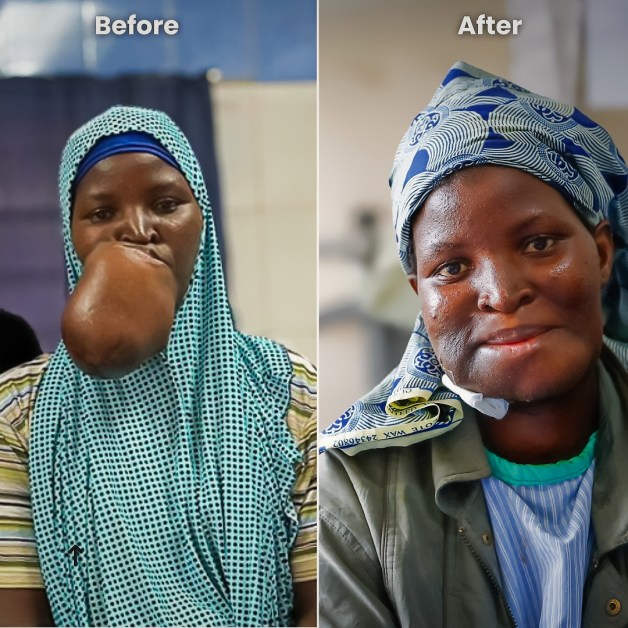
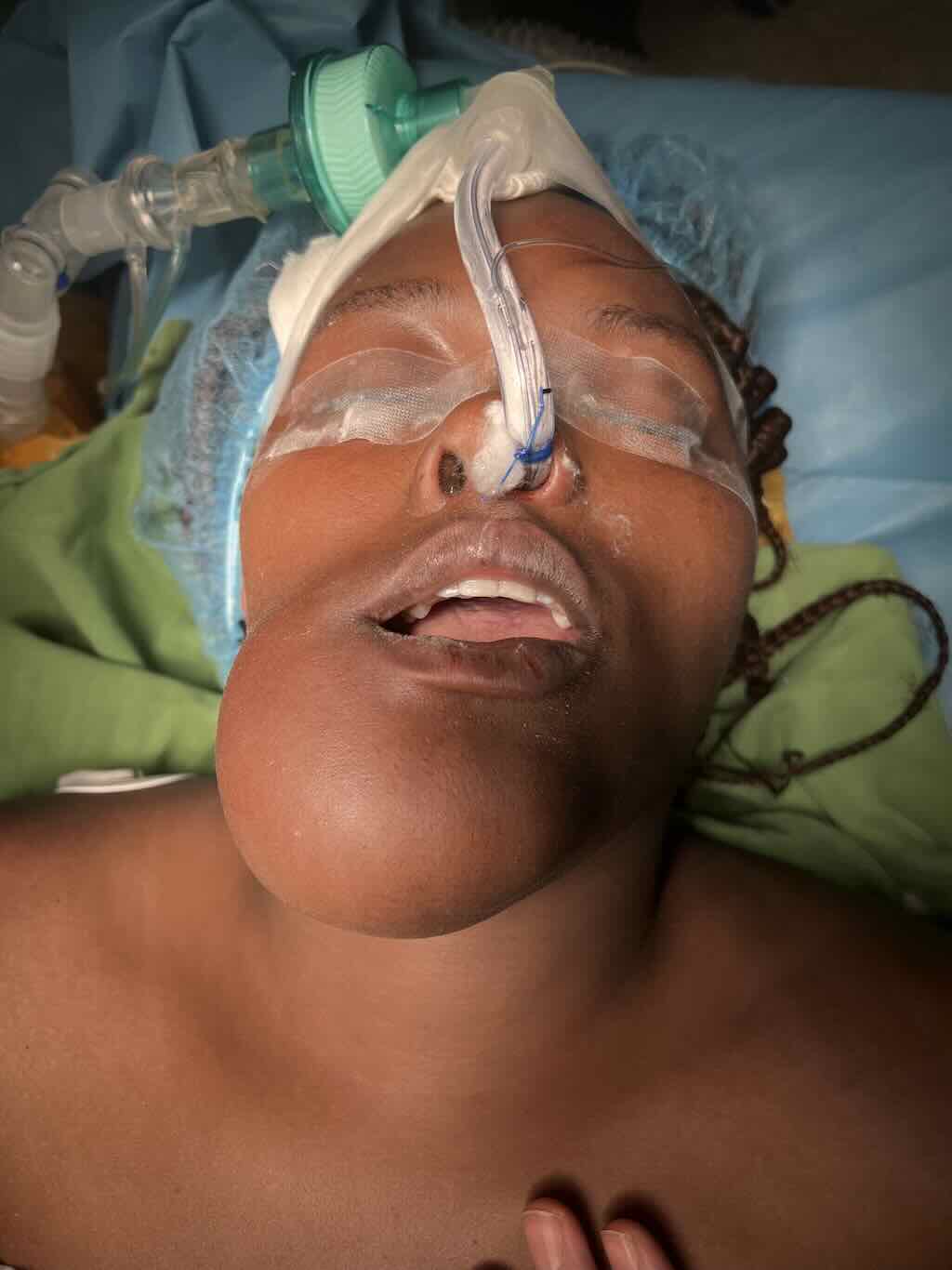
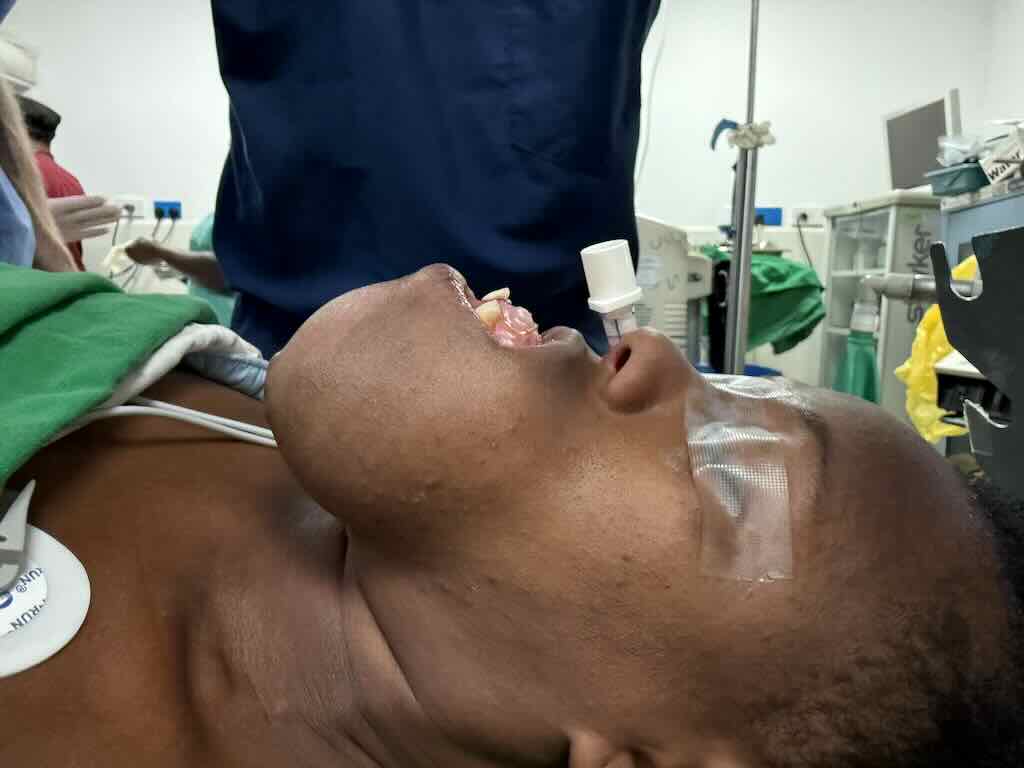
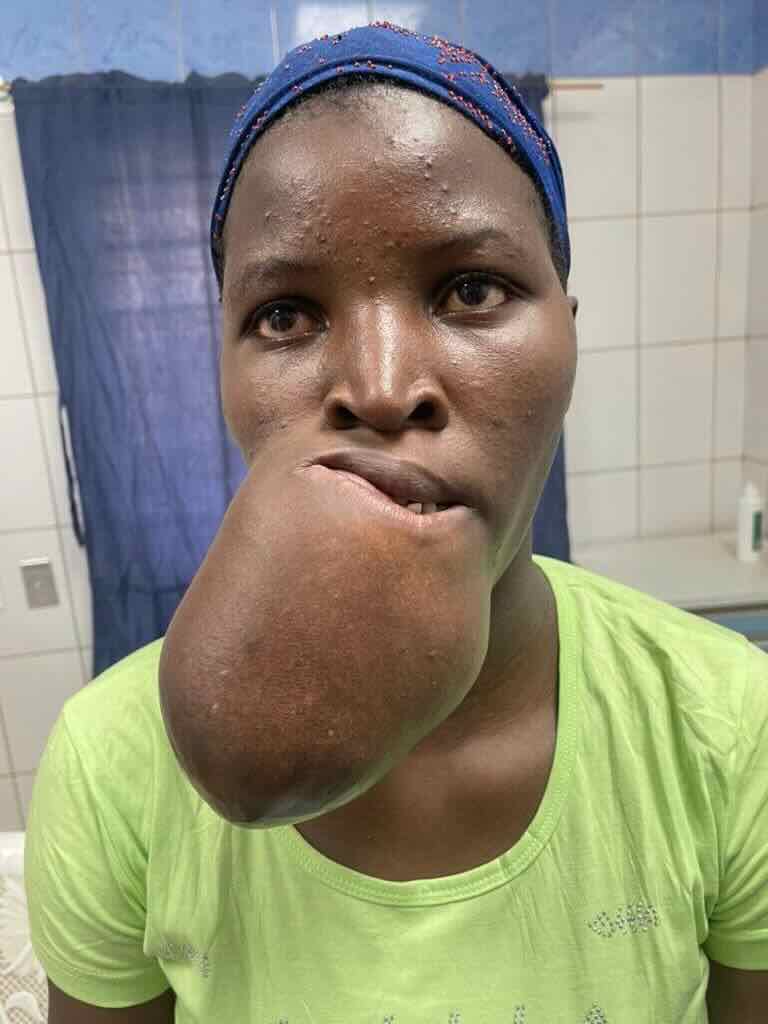
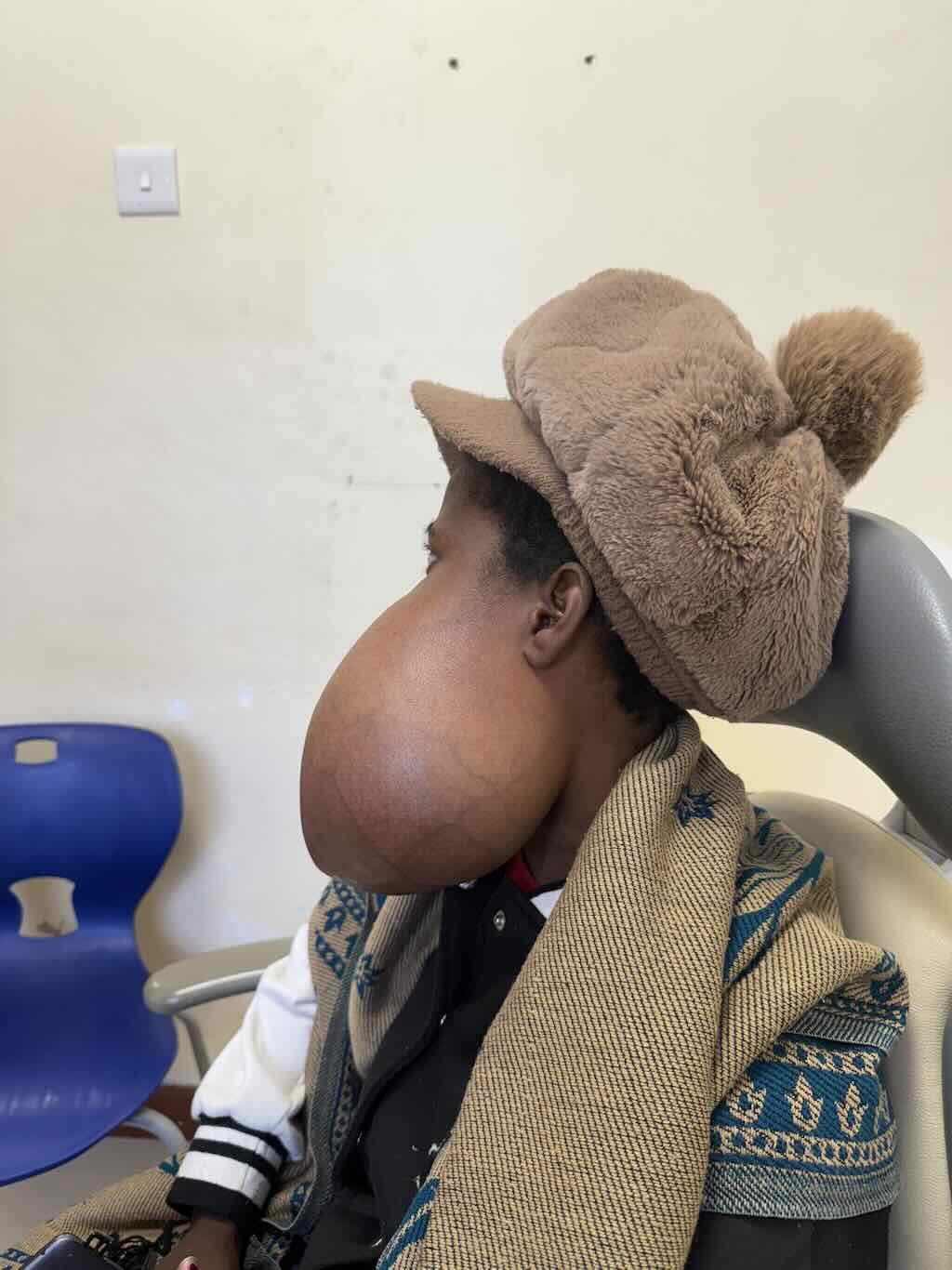
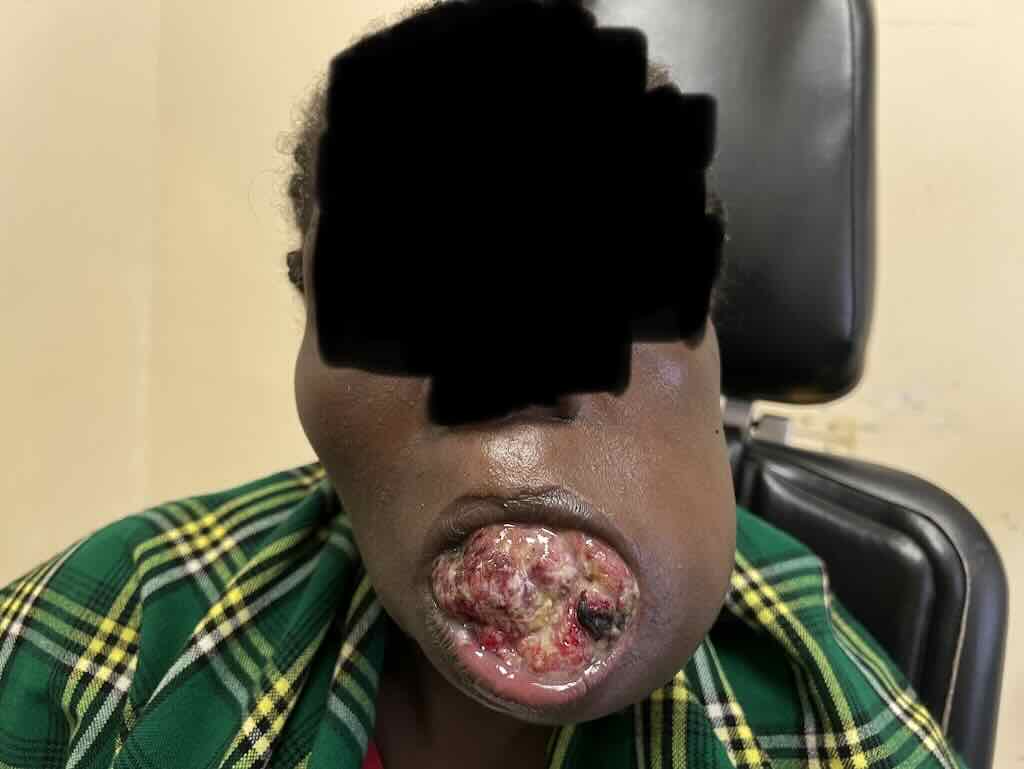
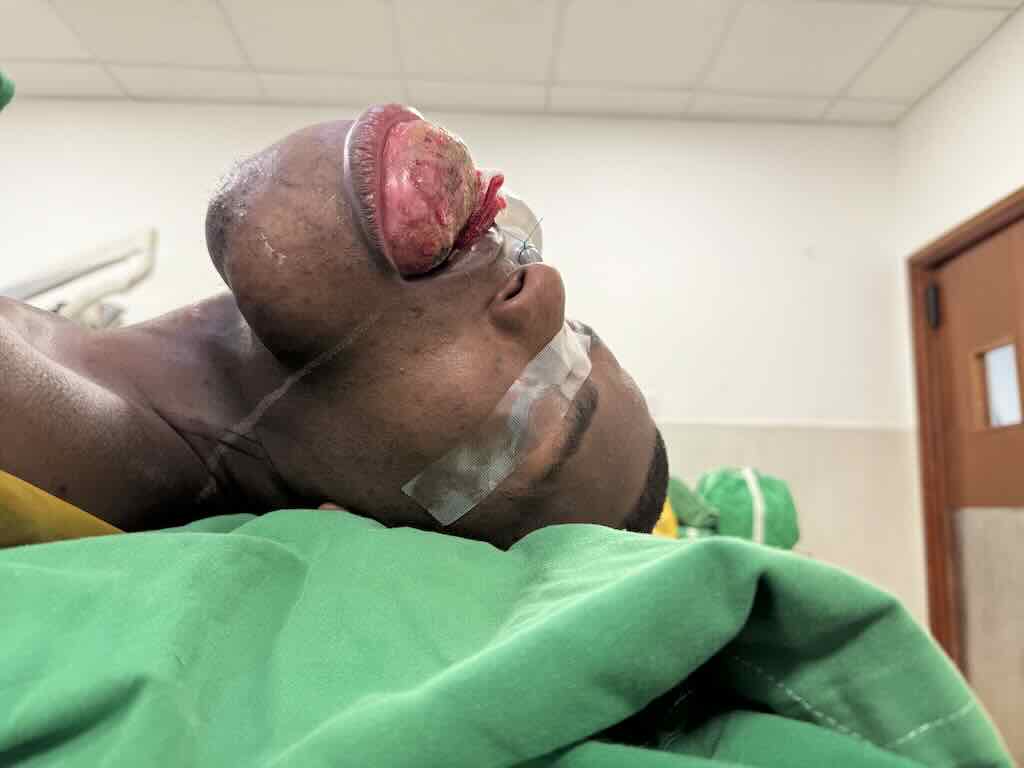
Ameloblastomas are benign but locally aggressive tumors that most often arise in the mandible (lower jaw). While they grow slowly, patients in Kenya frequently present with very large masses by the time they come for treatment — far larger than any I encountered during my surgical training in the United States.
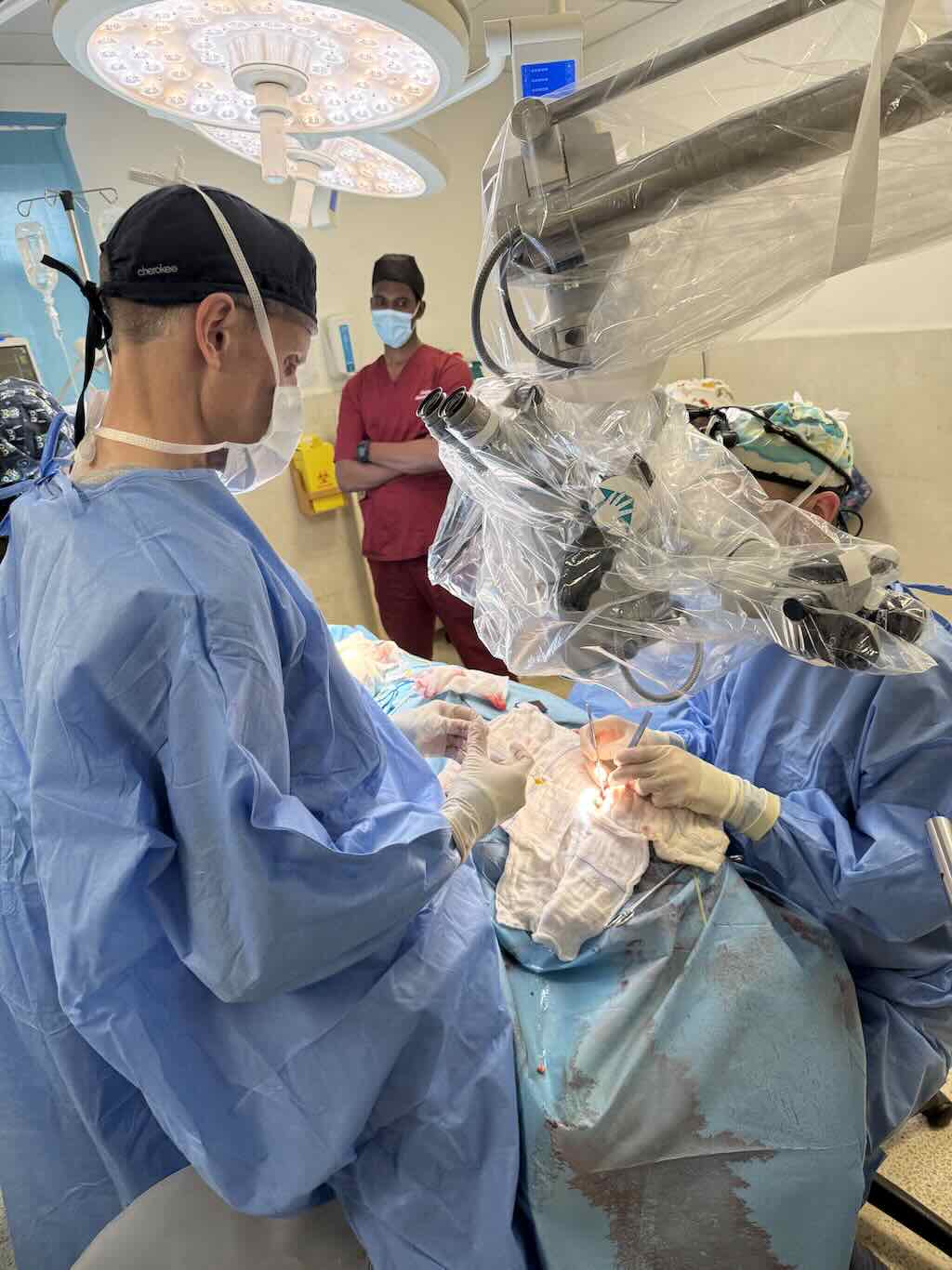
Once these tumors reach a certain size, they destroy large portions of the jaw, making removal and reconstruction complex. After removing the tumor and affected bone, we reconstruct the jaw using bone from the patient’s lower leg (a fibula free flap) to restore function and appearance. This long, potentially risky surgery requires specialized training and resources, and there are only a few centers across Africa equipped for the operation. As a result, patients often travel hundreds or even thousands of kilometers to reach us.
It is hard to overstate the devastating impact these disfiguring tumors have on patients’ lives. Many individuals with large ameloblastomas are shunned by their communities, unable to find employment, or too embarrassed to attend school. The social stigma of facial deformity can lead to isolation, depression, and hopelessness. We know that God’s heart breaks for the outcast, and there is healing in the kingdom of God. In Luke 10, when Jesus sent his disciples out among Israel, he told them:
“When you enter a town and are welcomed, eat what is offered to you. 9 Heal the sick who are there and tell them, ‘The kingdom of God has come near to you.’”
The Kingdom of God feels elusive sometimes, drowned out by the cacophony of the modern world, distorted by political rhetoric, and even demonized by those espousing tolerance. But there is no mistaking the healing that Jesus brings through the work at Kijabe, both the surgeons and the pastoral team, as a clear manifestation of the Kingdom advancing into the darkness of the fallen world.
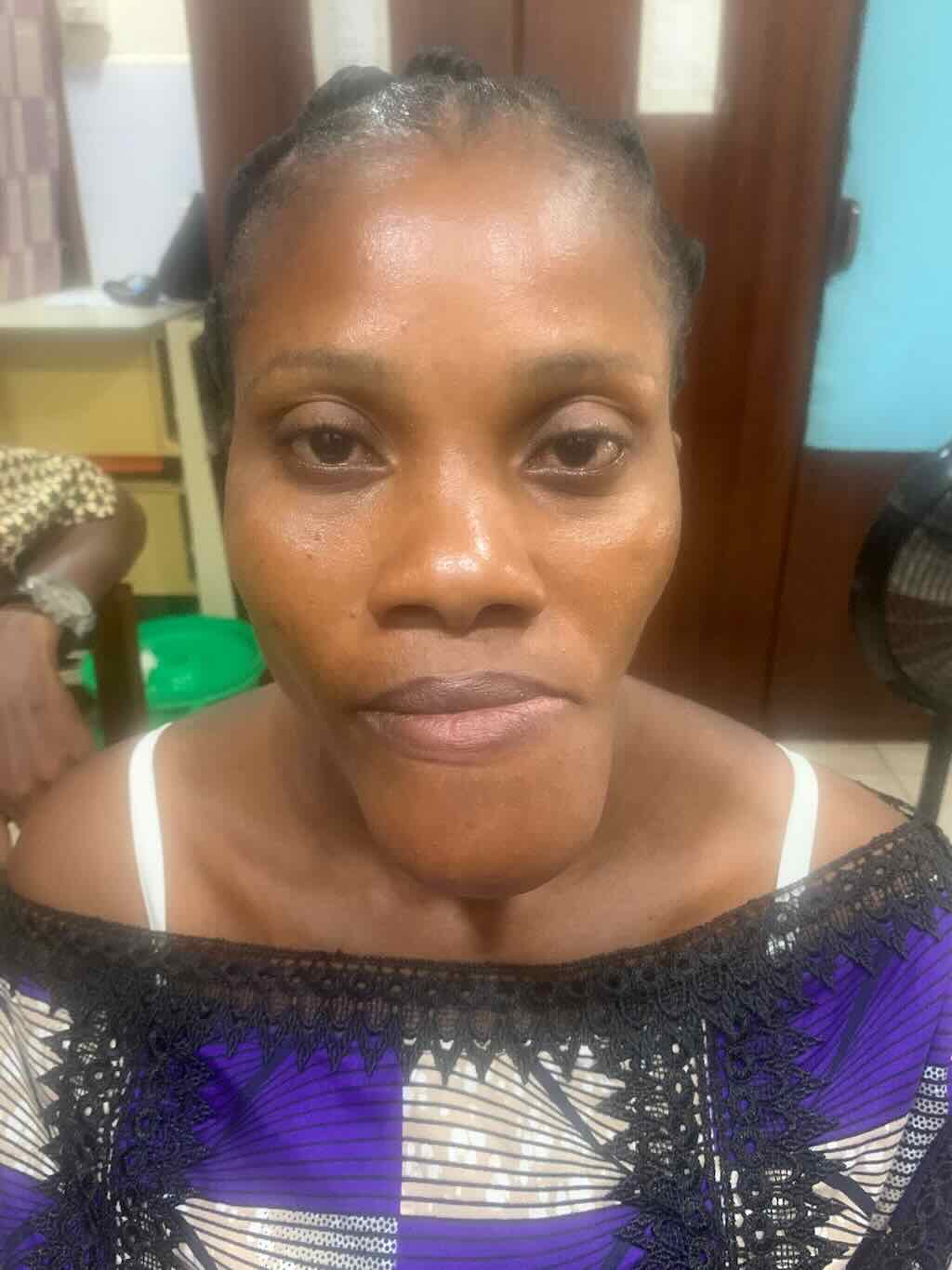
One of my patients, a young woman named Sarah*, lived with a massive jaw tumor for over six years. She shared how people would stare at her in the market, children would run away in fear, and even relatives avoided her. By the time she arrived at our hospital, the tumor had grown so large that it was difficult for her to eat or speak. After a successful tumor removal and jaw reconstruction, Sarah is now recovering well, smiling again, and considering returning to school. She is most excited to attend church without a face covering.
Here is a video the hospital made about another one of our ameloblastoma patients.
Yet providing this level of specialized care comes at a high cost. Surgical supplies, operating room time, hospital stays, medications, and months of postoperative care quickly add up. Many patients come from humble backgrounds and cannot afford treatment on their own. Financial support from donors helps cover the expenses of surgery, hospitalization, and follow-up care, ensuring that every patient who needs surgery can receive it regardless of their ability to pay.
How You Can Help
Our program relies on the generosity of supporters who believe that everyone deserves access to life-changing surgical care. Your donation directly funds:
✅ Our day-to-day expenses ✅ Surgical supplies and equipment
✅ Hospital costs for patients who cannot pay
✅ Travel assistance for patients coming from distant regions
✅ Postoperative rehabilitation, including speech and nutritional support
By supporting this work, you restore not just a patient’s face — but their dignity, ability to eat and speak, and place in their community.
If you would like to partner with us in bringing hope and healing to patients with ameloblastoma and other complex head and neck conditions, please consider becoming a financial partner.
*Name changed to protect patient privacy.


 Kenya Hear