
Sundays at Kijabe Hospital are usually limited to inpatient rounds, but every now and then there is decidedly more excitement. This past Sunday began early, the peaceful morning pierced abruptly by a WhatsApp message from the on-call general surgeon. A “mass casualty” had unfolded overnight, with three victims having facial trauma. I found that text somewhat cryptic and vague, but nevertheless it was enough to spur me out of bed and into scrubs. I hurried to get to the bustling casualty (emergency) department, knowing that I still had to round on my six inpatients sometime that day as well. The morning air was cool and the fog was still hovering over the ridges of the great rift valley, visible in the distance as I walked to the hospital. The level of noise and activity surrounding the casualty department were uncharacteristic for a Sunday morning, out of place in the otherwise peaceful dawn. Casualty is one big room with beds lining three walls, patients separated by thin curtains. There is a desk in the middle where the few nurses and clinicians do their charting. I didn’t have bed numbers or patient names, but spotting the patients with bandages covering their faces wasn’t difficult. Gathering fragments of information from the nurses standing about, I sought out the general surgery resident who had admitted the patients a few hours earlier. As anxious relatives streamed in, a clearer picture of the incident in Kimende, just ten minutes from Kijabe, began to emerge. On the highway, a lorry (truck) had run into a matatu (an overfilled Toyota van that serves as the public transportation here in Kenya). The lorry driver’s injuries were severe—a scalp degloving injury and fractures to his zygoma and mandible. Inside the matatu, a father was traveling with his 16-year-old twin daughters, though their familial connection wasn’t immediately evident amidst the turmoil. One of the girls had a deep forehead laceration, still oozing blood, and still spotted with dirt and bits of road. The father had an orbital rim fracture and a deep nasal bridge laceration. I decided to repair his lacerations right there at his bedside, and save his fracture repair for another day. Tragically, the other twin sustained massive head trauma, and despite our initial hopes, her condition deteriorated rapidly.

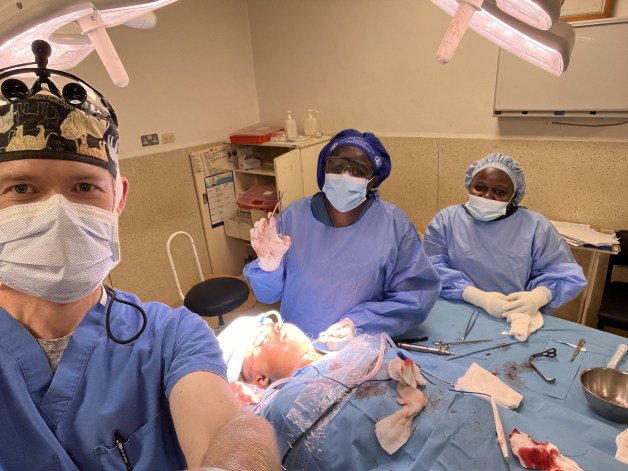
A 15-year-old boy from the matatu had his own set of challenges—a deep jagged cut near his eye, along with fractures in his zygomatic arch and mandible. He clearly needed an operation right away, but insurance issues complicated our ability to prioritize his surgery. There are only two anesthetists available on the weekend, and two emergency c-sections meant we had to wait. We brought the 16yo with the forehead laceration to theatre first, at about 4pm. In the midst of the repair, we received an urgent call from casualty. “The boy’s neck was swelling rapidly, and he started having trouble breathing,” they said. “So we performed an immediate intubation to secure his compromised airway,” they continued. We desperately needed to transfer him to the operating room, but another trauma patient was in the only other open room, so we had to complete our ongoing surgery first. I don’t typically get too worked up at the hospital, but this situation was turning south. As we quickly finished the last skin stitches, I tried to recall noticing any wounds on the boys neck, or any signs that something sinister was going on beneath the skin. I could not understand what had happened to his airway, or what was causing his neck swelling.
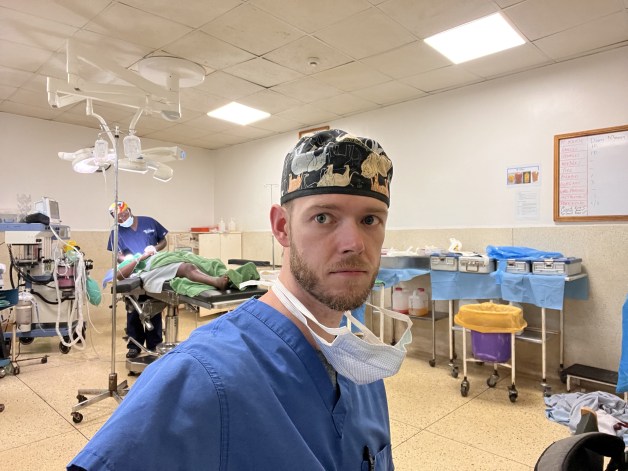
Immediately after scrubbing out, I reviewed the boy’s CT scan with apprehension that I had missed something. Though the scan hinted at superficial air in his neck, there were no obvious injuries to his great vessels. The theatre staff got him into the room quickly, which was a minor miracle by itself given the challenges of transporting intubated patients down ramps while wheeling a giant oxygen tank. His physical examination was reassuring. His neck felt soft, showing only minimal swelling from the whiplash effect. With cautious optimism, I removed the breathing tube from his mouth, and replaced it though his nose so that I could align his teeth during the mandible repair. This allowed a good look at the larynx, which was free of swelling or bruising. Despite the events in casualty, I chose not to open his neck to explore for trauma, which turned out to be the right decision.
By 9pm we had his zygoma and mandible plated, and his facial laceration repaired. The on-call staff were unfamiliar the instrument sets, the screwdriver didn’t really fit the screws, and it took three trips for them to bring the right suture. But those setbacks have become comfortingly familiar. My general surgery resident had already done her ENT rotation, so she was a great help. At the conclusion of the case, we decided to attempt extubation, which thankfully was uneventful. By the next day he had been cleared to go home.
Sadly, catastrophic traffic accidents are quite common in Kenya. Bad roads, old cars, underpowered semi trucks, livestock on the road, and a host of other factors make driving in Kenya particularly dangerous. As I cared for the victims of this crash, questions flooded my mind- Were the police investigating? Would there be any justice for the family that lost a daughter and sister? My answers never came, but I pray that the family isn’t left without any answers. In the end, we know Jesus is the answer. “The last enemy to be destroyed is death.” (1 Cor 15:26). But until “God has put all things under his feet” (1 Cor 15:27), Psalm 34:18 says “The LORD is close to the brokenhearted and saves those who are crushed in spirit.” Getting to take care of these people in the midst of tragedy and suffering means being part of the kingdom of God slowly advancing on the strongholds of illness and injustice. I long for the day when, “the Lord Jesus Christ, who, by the power that enables him to bring everything under his control, will transform our lowly bodies so that they will be like his glorious body” (Phil 3:21). Having this hope brings comfort during tragedy, and sharing that hope with hurting patients is one of the joys of working here at Kijabe.
Thanks for reading. If you have a lead on some facial plates and screws, let me know.
Bryce
 Kenya Hear
I am confident the people of Kenya are thankful for you!
LikeLike