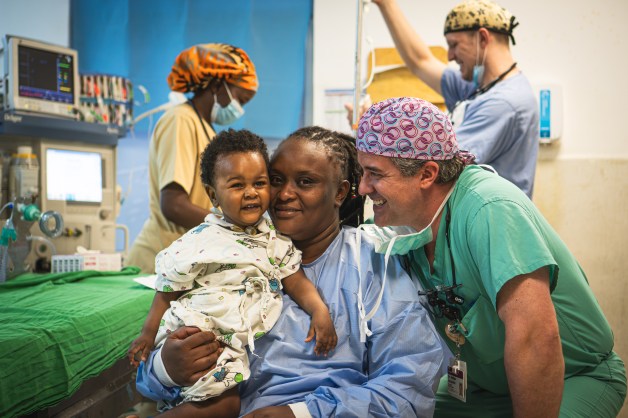
Four Airways, Four Futures: A Story of Restoration at Kijabe
Earlier this year, a visiting pediatric ENT surgeon named Nathan Alexander came to Kijabe for one purpose: to rebuild the airways of four children living with tracheostomies. As I write this, all four of those tubes are gone. Four children who had spent months — in some cases years — breathing through a hole in their neck are breathing, instead, through their own restored airways.
We believe this is a story about surgery. We also believe it is a story about God’s faithfulness, worked out through scalpels, scopes, insurance forms, and the patient hands of a team willing to keep showing up for four children until the work was finished. This is the story of how that happened, why it mattered, and why it was so hard.
The Problem Behind the Trach
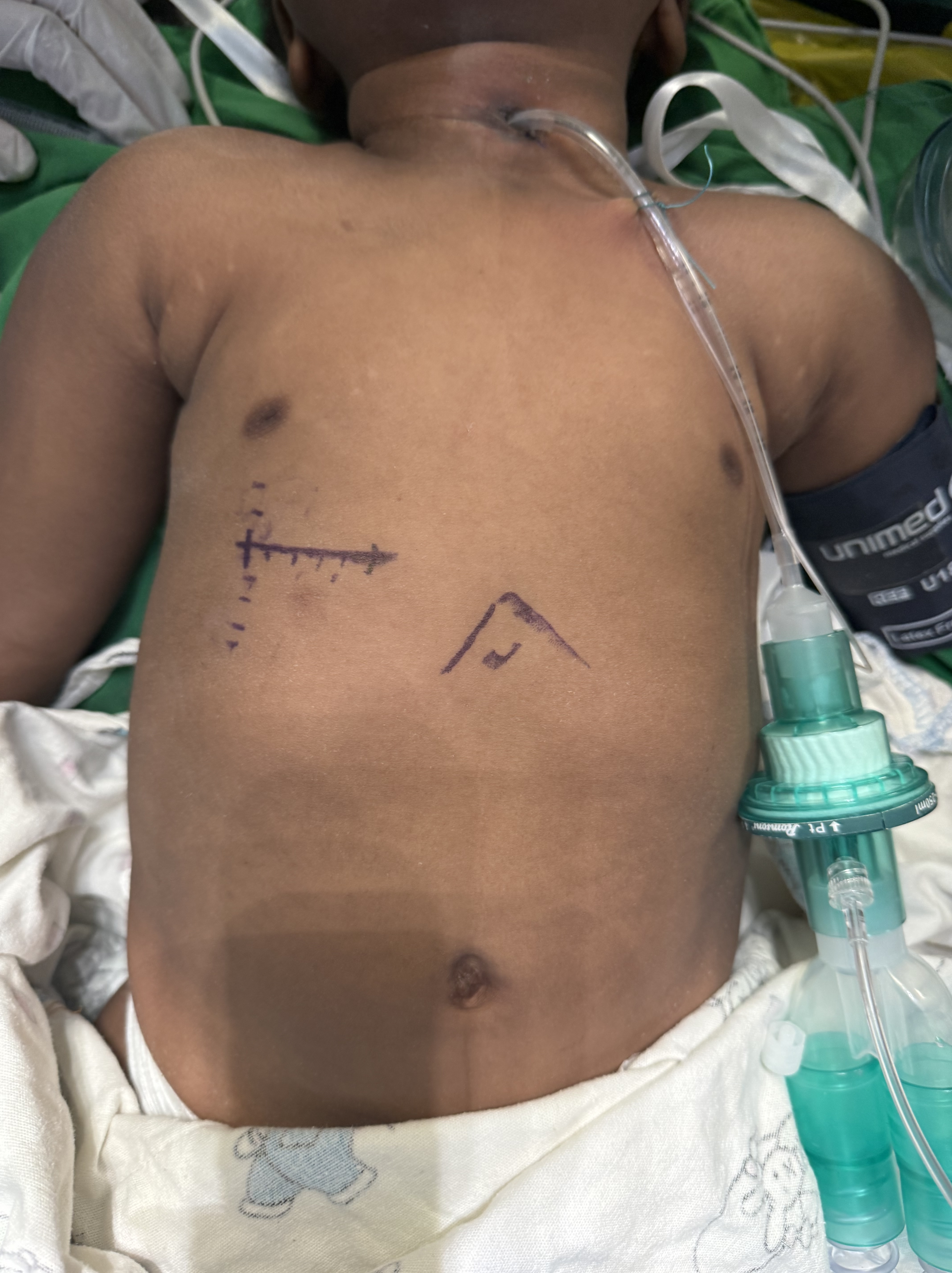
A tracheostomy — a surgically created opening in the neck that allows a child to breathe when the upper airway is blocked — is a lifesaving intervention. It is also, in most cases, meant to be temporary. But for children with subglottic stenosis, a narrowing of the airway just below the vocal cords, temporary can stretch into permanent if nothing further is done.
Subglottic stenosis in children has many causes. Some are born with an airway that never developed to full width. Others develop scar tissue after prolonged intubation as newborns — often in the very NICUs that saved their lives in the first place. Whatever the cause, the result is the same: the space these children have to breathe through is too narrow to sustain them without a trach.
Living with a tracheostomy as a child in rural Kenya is its own kind of hardship, one that most donors and prayer partners reading this have never had to imagine. A tracheostomy tube must be suctioned multiple times a day to keep it clear of mucus. It can dislodge or become blocked in seconds, turning a car ride, a nap, or a walk to fetch water into a life-threatening event. Children with trachs cannot swim, cannot easily play with other children who don’t understand the tube in their neck, and often cannot speak normally, because air bypasses the vocal cords entirely. Parents live with a level of vigilance that never fully switches off — the tube has to be watched every hour of every day, for years, by families who are also trying to farm, work, and raise other children.
The only way out of that reality is not to manage the trach better. It is to fix the airway underneath it, so the trach is no longer needed at all. For these four families, that felt, for a long time, like an impossible prayer.
A Surgery Kijabe Could Not Yet Offer Alone
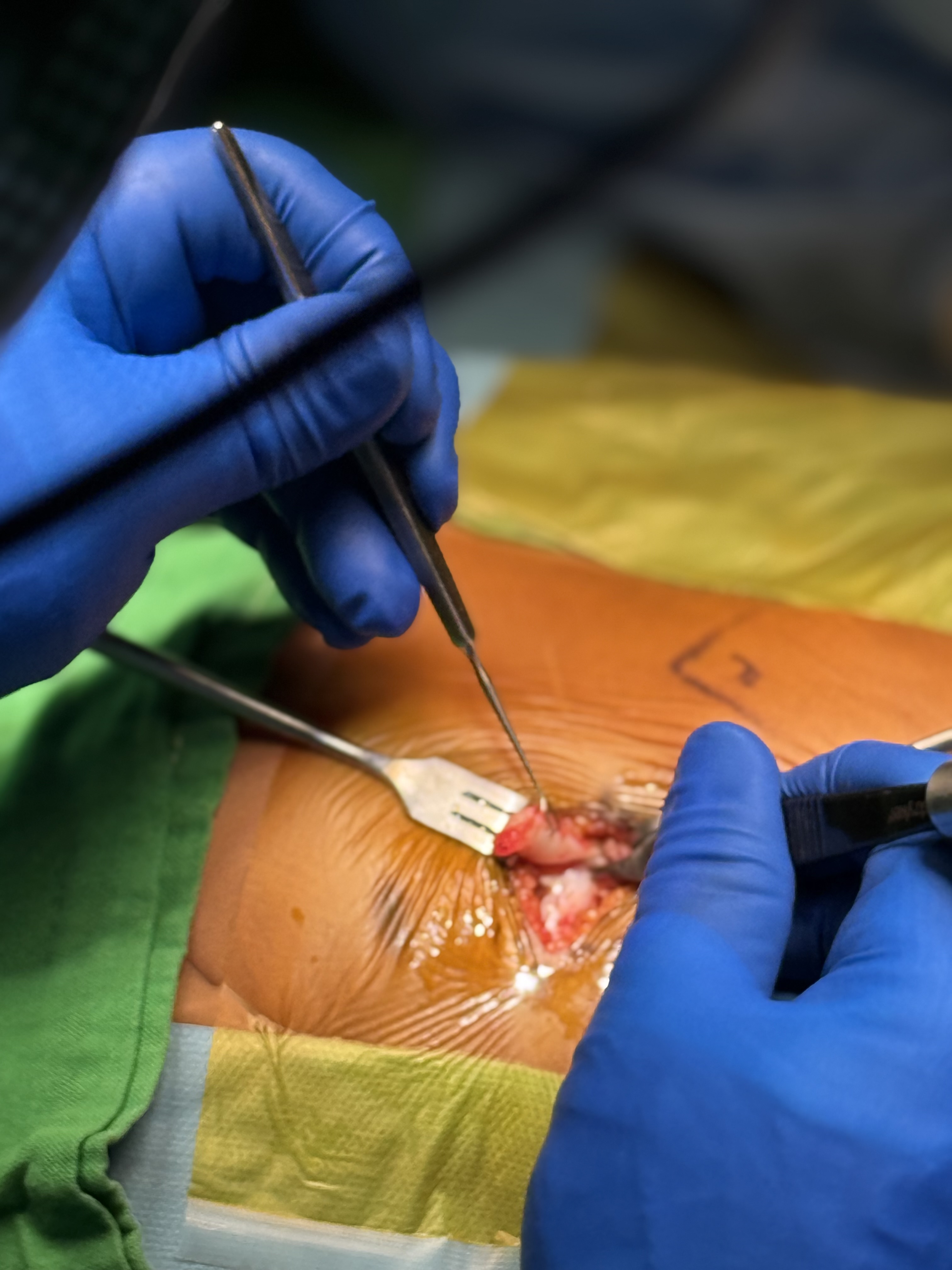
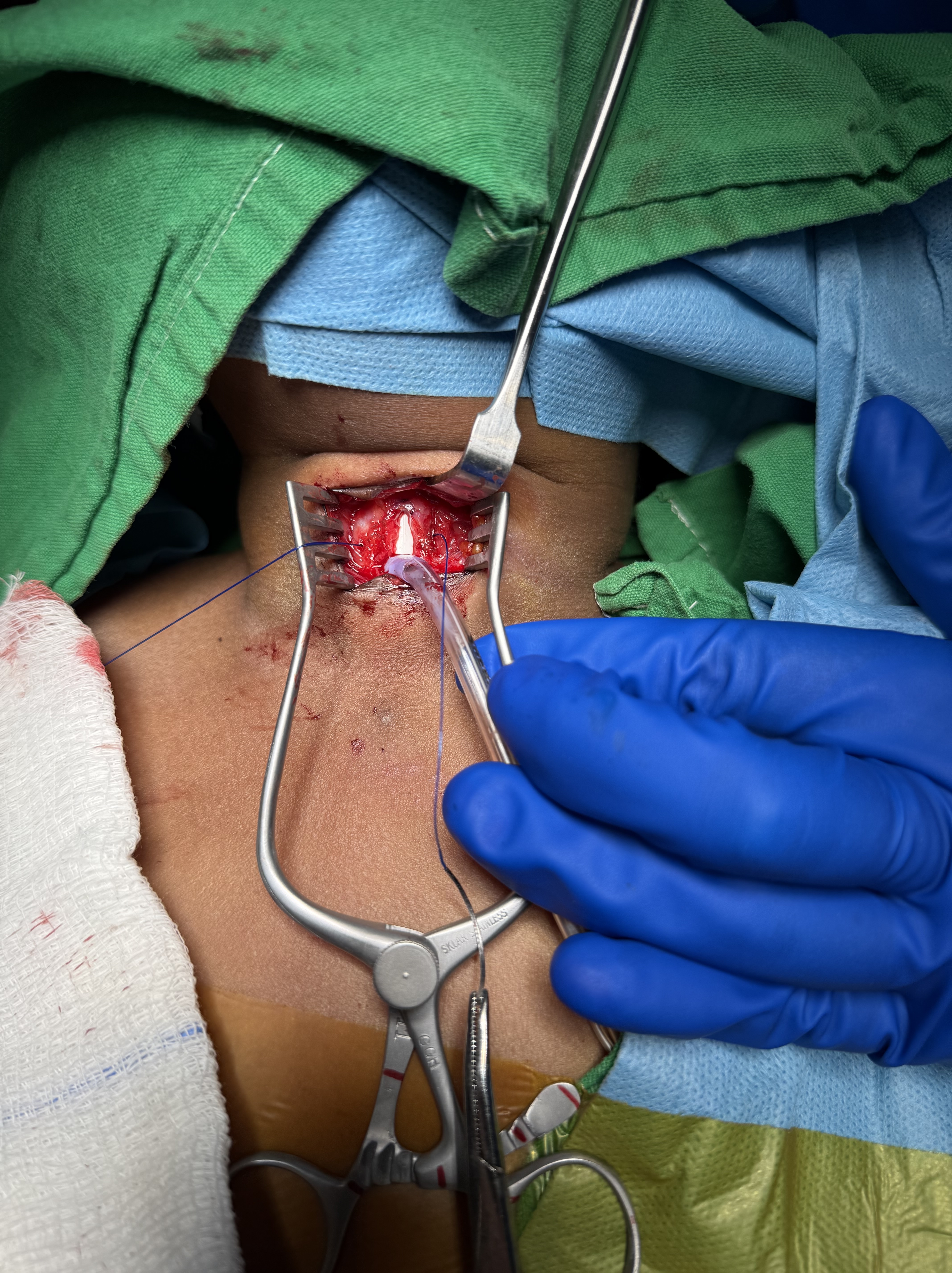
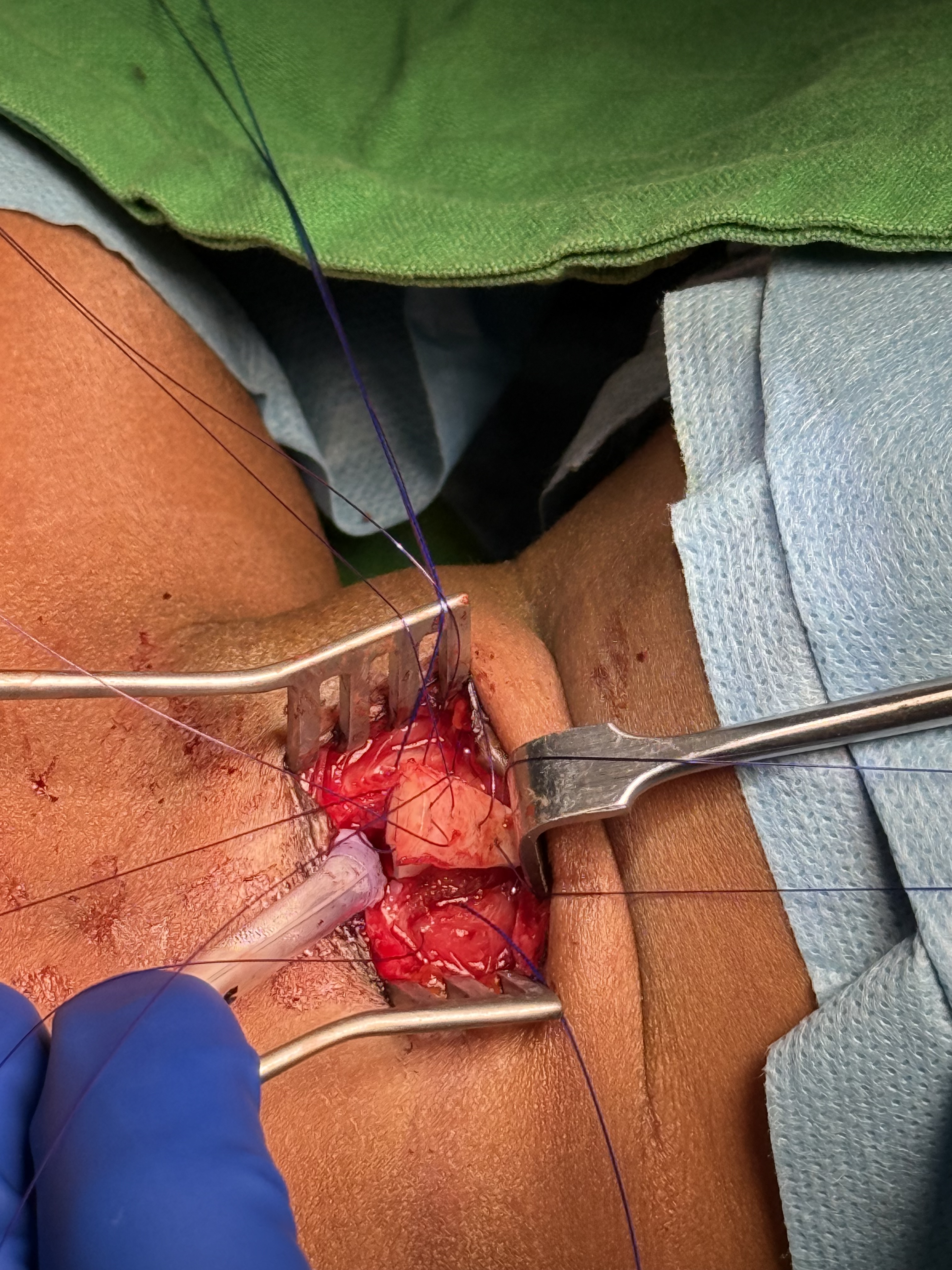
Fixing a narrowed pediatric airway is called laryngotracheal reconstruction (LTR). In simple terms, the surgeon widens the narrowed segment of the airway using a graft of the patient’s own rib cartilage, then places a stent in the airway to hold it open while it heals. It is meticulous, high-stakes surgery, done on structures the width of a pencil, in children small enough to fit in your arms. It is also a subspecialty within a subspecialty — pediatric airway reconstruction is practiced by only a small number of surgeons even in well-resourced countries, and almost none in East Africa.
That is why, earlier this year, we brought in Dr. Nathan Alexander, a visiting pediatric ENT surgeon with specific training in airway reconstruction. His trip had one purpose: four children, four trachs, four chances to give a child back their airway. We give thanks to God for surgeons like him — skilled hands willing to give their time and expertise in service of children they had never met, in a hospital far from home, because they see that skill itself as something entrusted to them for exactly this kind of work.
This is also where the value of Kijabe’s model becomes clear. We were not simply hosting an outside surgeon who flew in, operated, and flew out. Our own ENT team worked alongside him — in the pre-operative planning, in the operating theatre, and in every one of the follow-up procedures that came after. That is how surgical capacity gets built in a place like this: not by importing a skill for a week, but by growing it, case by case, alongside a visiting expert who is willing to teach as much as he operates. We see this, too, as part of God’s provision for Kijabe — not just a surgeon for four children, but a partner in building something that will outlast his visit and serve the children who come after them.
Four Children, Four Journeys
Every one of these four children had a different road to the operating table, and every family carried a different weight of worry. What they shared was this: each child had lived with a tracheostomy long enough that it had become normal for them — normal to be suctioned, normal to be watched, normal to not be able to cry out loud the way other children do. And each set of parents had been told, in one way or another, that this might simply be how their child would live.
We do not believe that is the last word for any child. We serve a God who is in the business of restoration — of making a way where families had stopped expecting one — and we have watched Him do that, quietly and specifically, in the case of these four children.
Each child underwent laryngotracheal reconstruction to widen their airway. Each received a stent — a temporary internal support to hold the newly reconstructed airway open while it healed, before it could safely stay open on its own. And in every one of the four cases, when the healing was complete and the airway checked and rechecked, the trach could finally come out.
Four decannulations. Four children who can now breathe through their nose and mouth like any other child. Four families who no longer have to sleep with one ear listening for a blocked tube. We do not take credit for that. We simply got to be present for it.
What “Success” Actually Required
If the story ended there — surgeon arrives, surgery happens, trachs come out — it would already be a story worth telling. But it would also be an incomplete one, and we want you, our donors and prayer partners, to understand what success in this kind of surgery actually costs, because your partnership — and your prayers — covered that cost.
Airway reconstruction does not end in the operating theatre. After the initial surgery, each child needed to return to theatre — not once, but multiple times — so the surgical team could look inside the healing airway with a scope, check that the reconstruction was holding, and manage two things that threaten to undo the whole effort: the stents themselves, and granulation tissue.
Granulation tissue is the body’s own healing response — new, fragile tissue that grows over a healing wound. In most parts of the body, that is exactly what you want. But inside a reconstructed airway that is only a few millimeters wide to begin with, granulation tissue can regrow so aggressively that it renarrows the very passage the surgery was meant to open. Left unchecked, it can undo months of healing in a matter of weeks. So our team had to go back in, repeatedly, under anesthesia, to trim it away before it could close off the airway again.
The stents required their own careful choreography. Placed too briefly, the airway may not hold its new shape once support is removed. Left too long, they become a source of infection and irritation, and a breeding ground for the very granulation tissue we were trying to prevent. Getting the timing right for stent removal, individually, for four different children with four different rates of healing, meant close monitoring, careful scope-based reassessment before each decision, and a team disciplined enough to say “not yet” when a child’s airway simply needed more time.
Multiply this across four children, over months, and you begin to see what “we removed all four trachs” actually represents: dozens of hours in theatre, dozens of scope examinations, and a surgical and anesthesia team willing to keep showing up for the same four children, again and again, until each airway was truly ready. We asked you to pray through many of those individual procedures, often without fanfare — a scope here, a stent adjustment there — and we want you to know that every one of those quiet prayers was part of how this story reached its ending.
The Obstacle Nobody Sees in the Operating Theatre
For every family involved, one of the hardest parts of this journey had nothing to do with the airway itself. It was navigating insurance.
Reconstructive airway surgery, with its multiple trips to theatre and extended hospital stays, is expensive by any standard, and in a context where many families pay directly out of pocket or depend on limited insurance coverage, that cost can be the difference between a child getting the surgery they need and a family being forced to wait — sometimes indefinitely. We walked alongside these four families through approval delays, coverage gaps, and the kind of paperwork that can feel, to an exhausted parent, like just one more obstacle standing between their child and a normal life.
This is precisely where your giving does something that no surgical skill alone can do. Surgical expertise can rebuild an airway. It cannot, by itself, close a coverage gap or absorb the cost of a repeat trip to theatre that insurance was slow to approve. Your partnership — financial and in prayer — is what allowed our team to keep saying yes to the next scope, the next stent check, the next small procedure, even while the insurance questions were still being sorted out behind the scenes. Four children did not go without care while paperwork caught up, because you had already made a way. We have watched God provide, again and again, through the ordinary faithfulness of people like you.
What This Means, Beyond the Airway
A child without a tracheostomy can bathe without fear. They can swim, something almost every child in this part of Kenya grows up doing near a river or a dam, and something these four children had been barred from for as long as they’d had their trachs. They can speak in a full, unobstructed voice — sing in church, answer a teacher in school, call out to a sibling across a compound — instead of the muffled or absent voice that comes with a tube bypassing the vocal cords. They can sleep without a parent needing to check on them through the night, listening for a change in breathing. They can, in the fullest sense, simply be children again, without a device at the center of every decision their family makes.
For the parents of these four children, this is not a medical outcome. It is the return of an ordinary, unremarkable, deeply longed-for life for their child — the kind of life they had begun to fear might never come. We think of the words of Isaiah, that God binds up the brokenhearted and sets the captives free, and we do not think it is too much to say that these four families have tasted a small, physical picture of exactly that.
Why We’re Telling You This
We tell this story not to highlight one visiting surgeon, however skilled and generous he was with his time, but to show you the shape of what your partnership makes possible. A single trip by a specialist could not, on its own, have rebuilt four children’s airways. It took a hospital willing to host and train alongside him. It took an anesthesia and nursing team willing to bring four children back to theatre as many times as it took, not as many times as was convenient. It took a system for walking families through insurance obstacles instead of letting those obstacles decide the outcome. And underneath all of it, it took the steady, often invisible support of donors and prayer partners like you, who made it possible for our team to keep saying yes.
We believe Kijabe exists because the Lord has placed it here, for such purposes as this — and we believe your giving and praying are part of how He carries that purpose forward. Four children came to Kijabe with tracheostomies. Four children left without them. Somewhere between those two facts is months of careful, unglamorous work — scope by scope, stent by stent, approval by answered approval — that only happened because you were part of it, and because God was faithful through every step of it.
Thank you for standing with these families. Thank you for praying them through the waiting. And thank you for making it possible for four children to breathe, speak, and live, fully, on their own — to the glory of our God who heals.